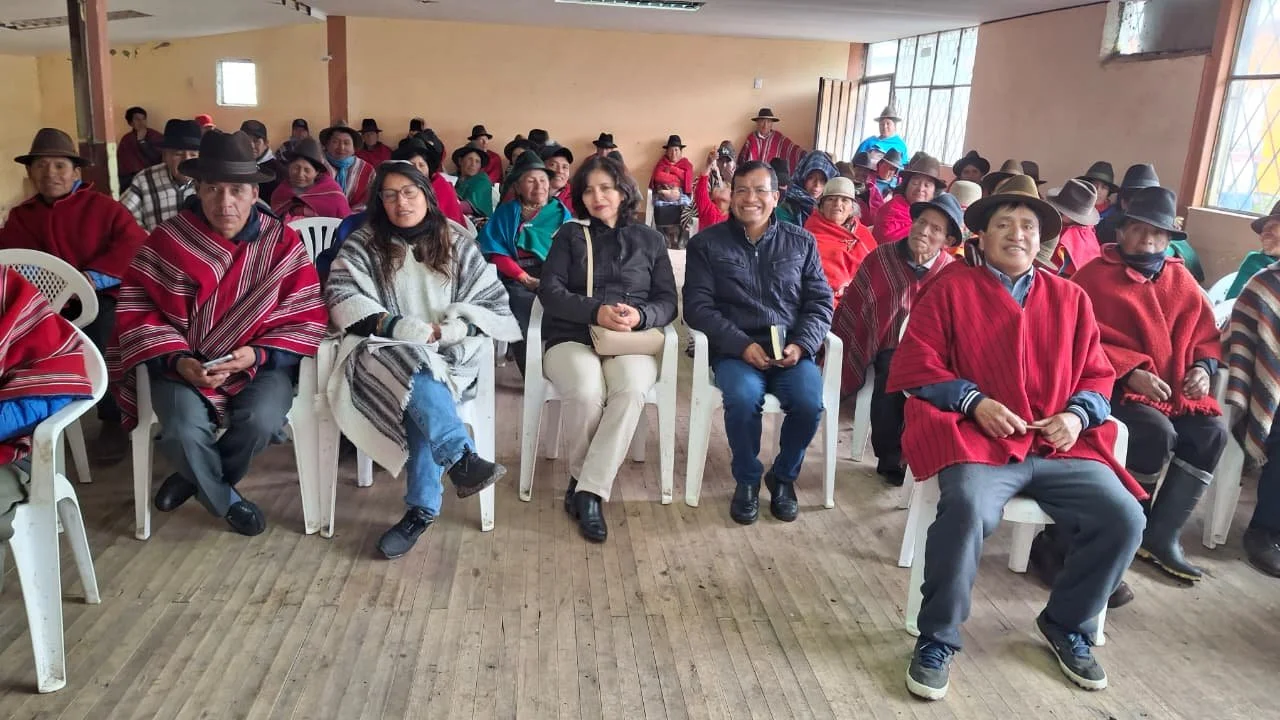
Community meeting with Dr. Luis Alberto Tuaza Castro, Universidad Nacional de Chimborazo and members of the Fundación Kawsayta Awashun in the Pull, Guamote, Chimborazo, Ecuador
The Highland Support Project (HSP) is proud to report on three community water and irrigation investments in Indigenous communities across two countries: two irrigation projects in Kichwa communities in Ecuador's Chimborazo Province — which include the installation of cisterns to collect and store water, equipping communities to manage shifting weather patterns, maintain reserves during drought periods, and adapt to changing climate conditions — and a potable water project to the community of Chuicutama in Santa Catarina Ixtahuacán, Sololá, Guatemala — a community displaced by climate-driven landslides and now rebuilding on a site atop solid volcanic rock formations that have made well-digging significantly more complex and costly than in ordinary circumstances.
The Ecuador work is a partnership among HSP, Dr. Luis Alberto Tuaza Castro, Professor at the Universidad Nacional de Chimborazo, and Fundación Kawsayta Awashun. The Guatemala assistance draws on HSP's long-standing relationships in the western highlands, including work conducted in collaboration with the Asociación de Mujeres del Altiplano (AMA) and partner networks in Sololá. All three investments were made possible by the generous support of the Bon Air Rotary Club, Old Bridge United Methodist Church, and the participants in HSP's annual Turkey Trout fundraiser.
Taken together, these projects reflect a shared conviction that runs through all of HSP's work: access to water is not a technical problem to be solved from the outside. It is a matter of justice, dignity, and community self-determination. In Chimborazo, water scarcity is the product of colonial dispossession and unequal agrarian reform. In Chuicutama, it is compounded by the forced displacement of a community already living on the margins of climate vulnerability. Both situations demand not only funding, but structural humility — an approach that follows community leadership rather than substituting for it.
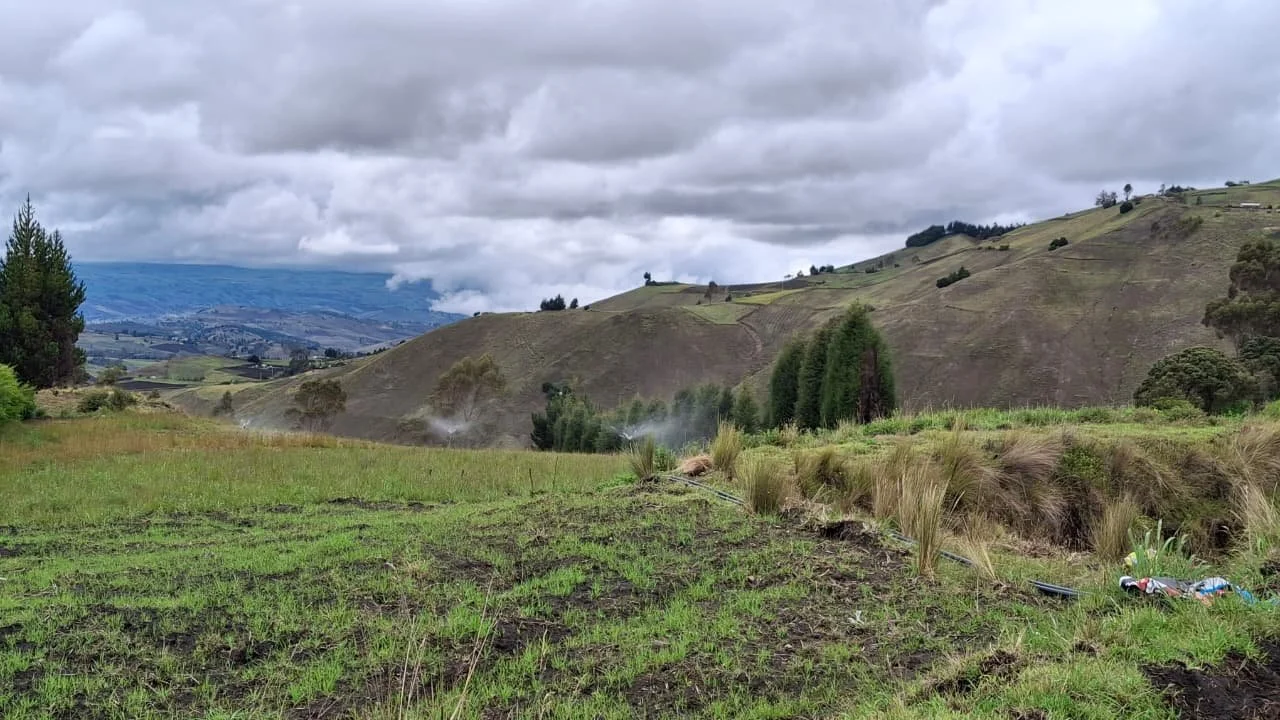
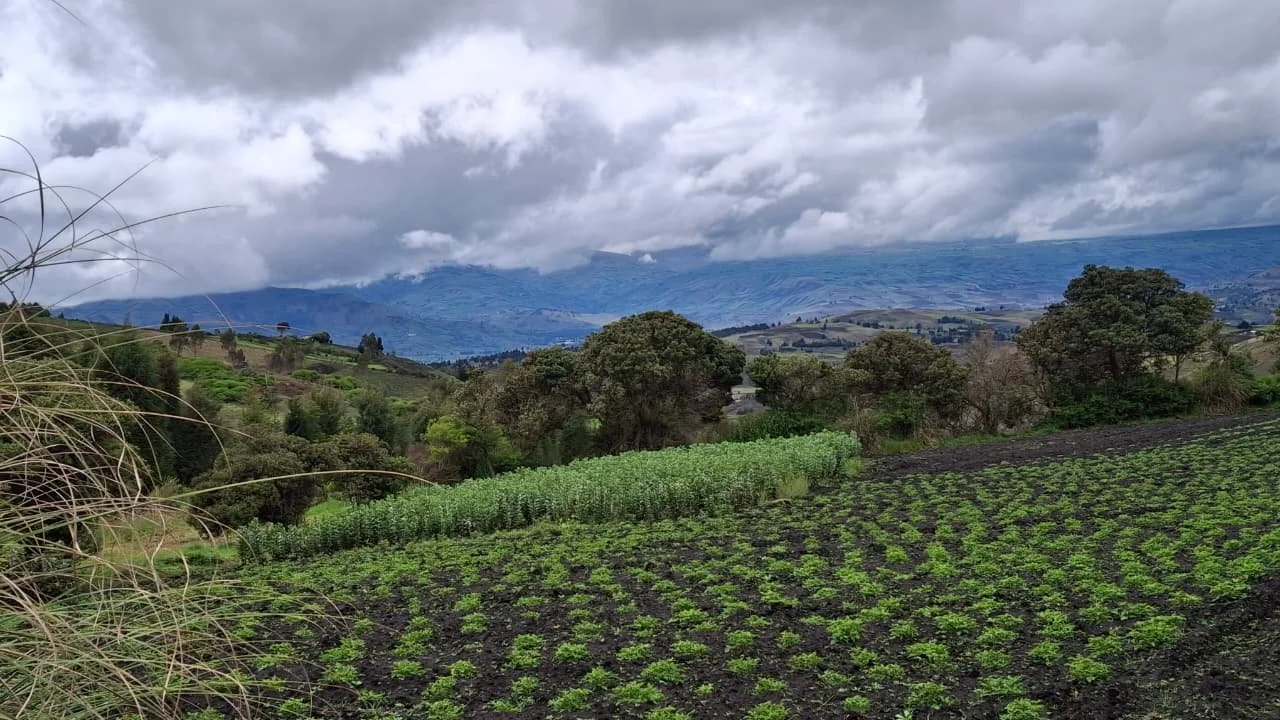
1. The Ecuador Context: Chimborazo Province
Geography, People, and Place
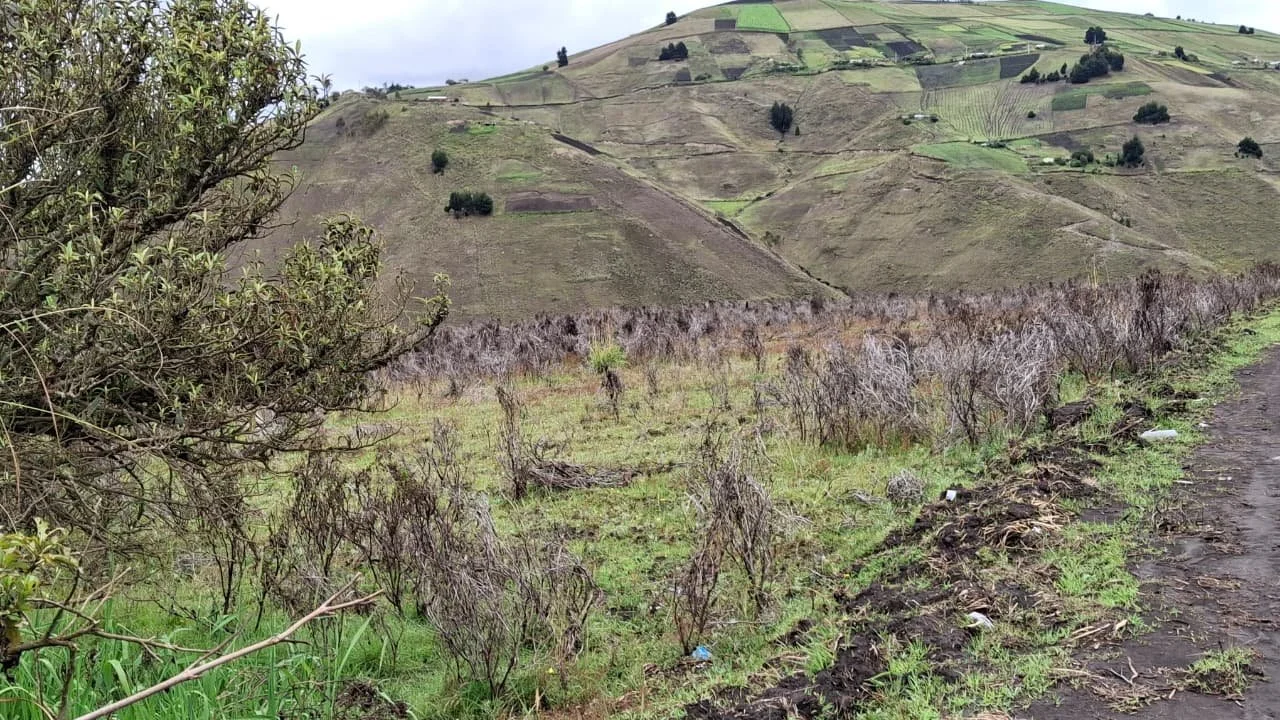
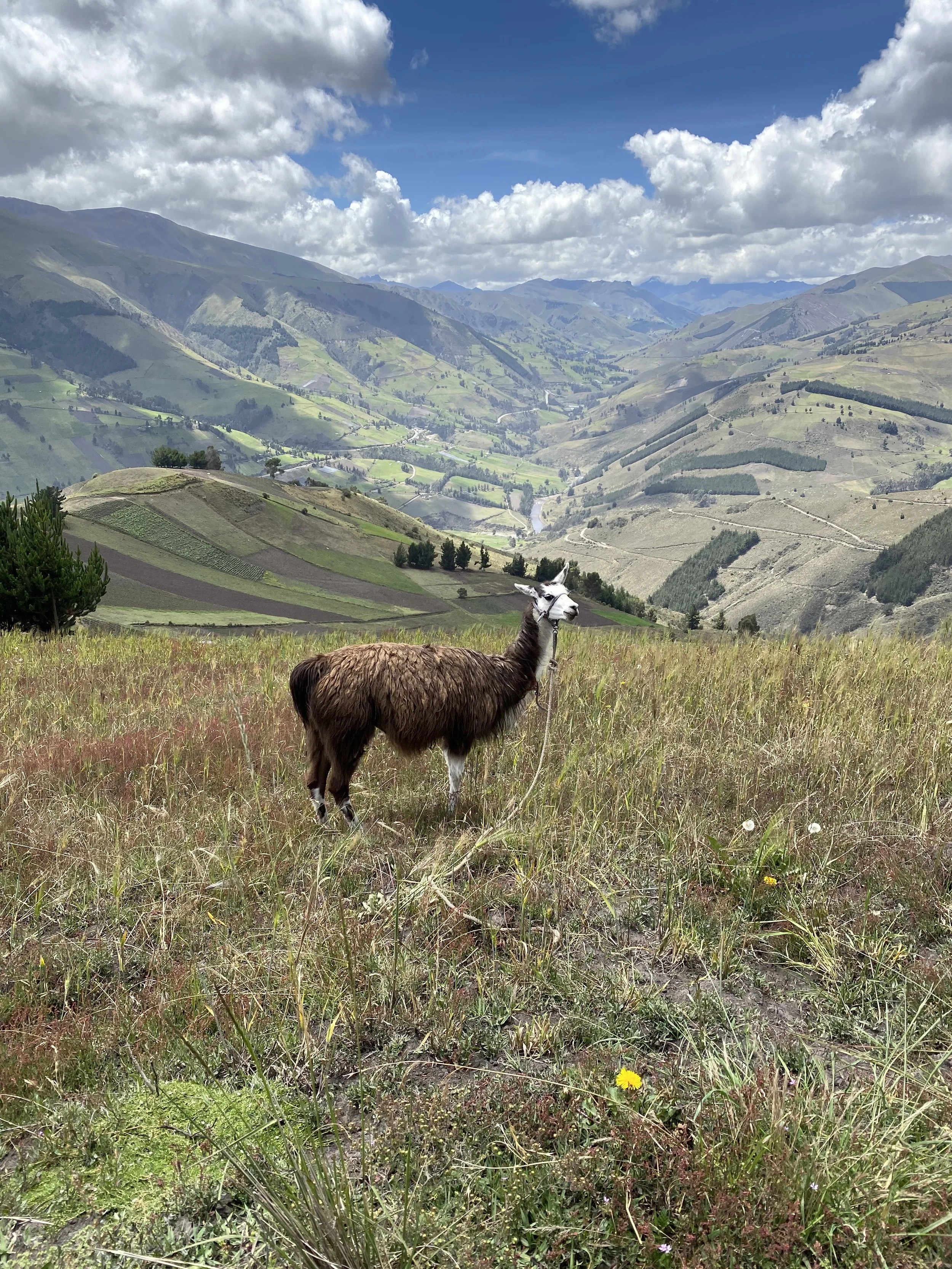
Chimborazo Province sits in the central highlands of Ecuador, along the inter-Andean corridor often called the "Avenue of the Volcanoes." Its capital, Riobamba, lies in a basin surrounded by some of the most striking peaks in the Americas. The tallest is Mount Chimborazo itself, at about 6,263 meters (20,548 feet). Because of the Earth's equatorial bulge, its summit is the point on the planet's surface farthest from the Earth's center.
The province's terrain ranges from temperate valleys to the páramo, a high-altitude grassland ecosystem found roughly above 3,500 meters. The páramo works like a giant sponge. Its spongy soils and plants capture moisture from rain, fog, and glacial melt, then release it slowly into springs and streams. For highland communities, the páramo is not wilderness at the edge of farmland. It is the source of their water.
Chimborazo has one of the largest Indigenous populations, by share, of any region in the Americas. Most Indigenous residents are Kichwa-speaking, and many identify with the Puruhá people, whose presence in the region predates both Inca and Spanish rule. The province also has some of the country's highest rates of rural poverty, and that poverty is concentrated in Indigenous highland parishes. This overlap of ethnicity, altitude, and deprivation is not a coincidence. It has a clear historical cause.
From Encomienda to Hacienda: The Historical Roots of Highland Water Scarcity
A Note on Terms
The encomienda, a colonial grant giving Spanish settlers the right to Indigenous labor and tribute, faded as a formal institution during the colonial period. What followed in the Ecuadorian highlands was the hacienda system. Under it, Indigenous families were bound to large estates through huasipungo, an arrangement that gave a family a small plot to farm in exchange for unpaid or barely paid labor on the landowner's fields. Historians such as Andrés Guerrero have shown that the hacienda kept the essential logic of colonial domination well into the twentieth century: ethnic hierarchy, debt bondage, and landowner control over Indigenous bodies and land.
In practice, this hacienda-huasipungo system was what lived on as the "encomienda" in popular memory. Chimborazo was one of its strongholds.
Agrarian Reform and Its Uneven Legacy
Ecuador's Agrarian Reform laws of 1964 and 1973 formally abolished huasipungo. In Chimborazo, this change had a uniquely moral voice. Monsignor Leonidas Proaño, Bishop of Riobamba and widely known as the "Bishop of the Indians," handed over Church-owned haciendas to Indigenous communities. He also backed the literacy and organizing work that helped give rise to the modern Indigenous movement.
Yet the redistribution was deeply uneven, and that is the central fact behind these grants. Many landowners kept the fertile, irrigated valley floors. Indigenous families often received:
High-altitude plots, frequently at or above 3,200–3,800 meters, where frost, wind, and short growing seasons limit what can be grown
Steep, erosion-prone slopes, where topsoil washes away with each heavy rain
Land without water rights, since irrigation canals and the water titles attached to them often stayed with the former estates
Freedom from servitude was real and hard-won. But it often came with ground that was difficult to farm and cut off from water. As population grew and plots were divided among heirs, families pushed even higher into the páramo just to survive. This put them in conflict with the very ecosystem that holds the region's water. A process of dispossession that began in the colonial era continues today in the form of unequal access to water.
Scholars of Andean water politics, notably Rutgerd Boelens and colleagues in the Justicia Hídrica (Water Justice) network, argue that water scarcity in the Andes is socially produced. Who gets water depends on power, on law, and on history, not only on rainfall. Dr. Tuaza's own extensive research on the Indigenous movement in Chimborazo places today's community struggles within this longer arc of agrarian conflict and organized resistance.
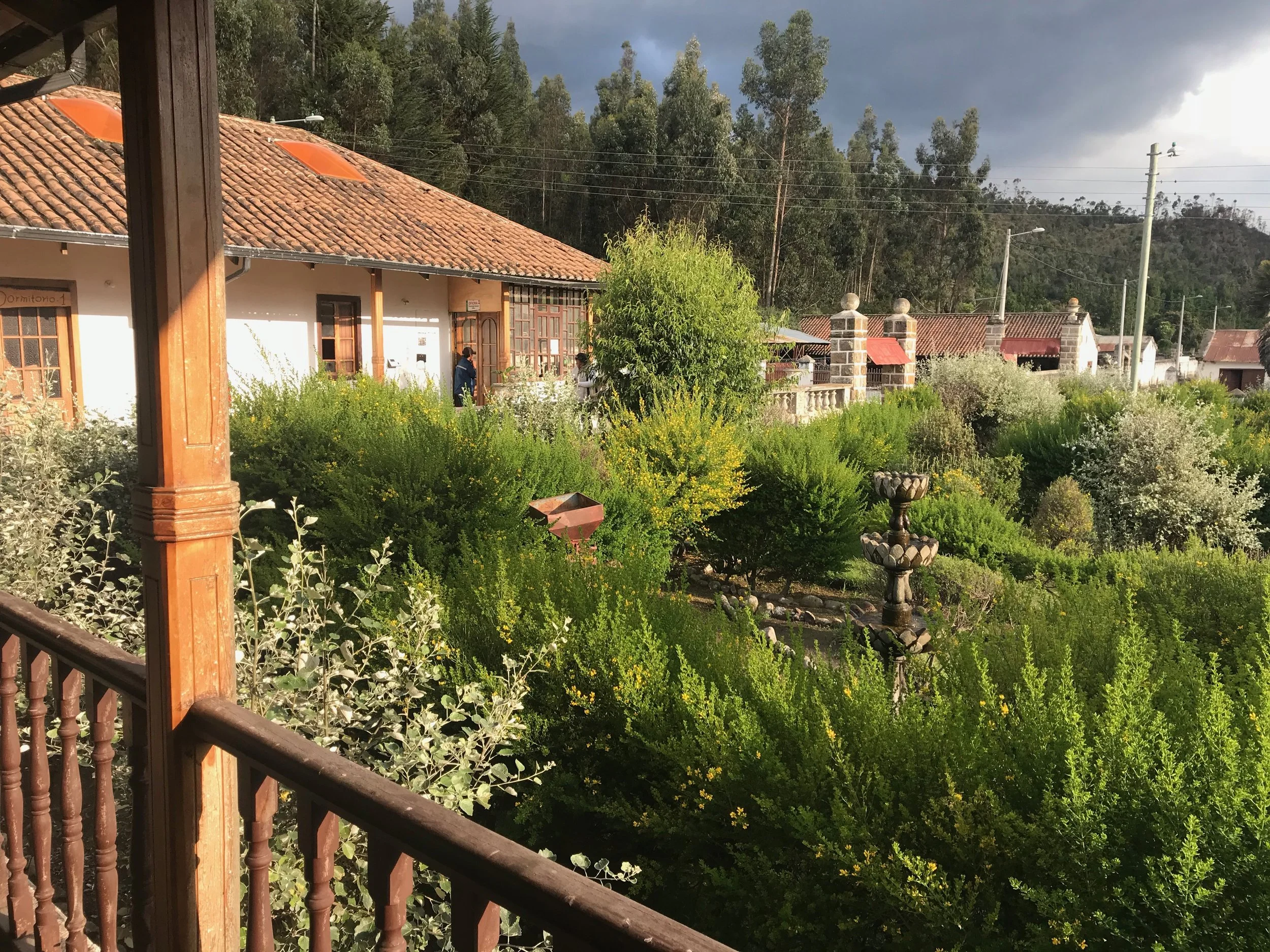
Hacienda Compound in Guamote, Chimborazo, Ecuador
The Andean hacienda and the New World plantation are often treated as distinct institutions. One is cast as a quasi-feudal estate producing grain and livestock for regional markets, the other as an export-driven enterprise built on chattel slavery. Yet this distinction obscures how much the two shared as total social institutions, systems that governed not only labor but residence, family life, worship, and justice. In Chimborazo, Indigenous and mestizo workers were tied to the hacienda through concertaje and the huasipungo arrangement. Under these systems, families received a small plot of marginal land and minimal access to water and pasture in exchange for years of nearly unpaid labor. The mechanism of bondage closely resembled the "company store." Wages, when paid at all, came as advances, goods, or credit redeemable only at the hacienda's own store, at prices the landowner set. Debts piled up faster than labor could repay them, and they passed from parents to children. Formally free workers became, in practice, attached to the estate, and they were sometimes transferred along with the land when a hacienda changed hands. Historians still debate whether this system was "feudal" or an early form of capitalism. Either way, the result was a regime in which landowners controlled people as fully as they controlled soil and water.
The Challenge: Water and Sustainable Agriculture at High Altitude
For the communities served by this grant, access to water shapes almost every aspect of economic and social life.
Agriculture depends on uncertain rain. Without irrigation, highland families rely on rain-fed farming. They plant potatoes, fava beans, barley, quinoa, and native Andean tubers such as oca and mashua. When rains come late or stop early, a full season's harvest can fail.
Climate change is making things worse. The glaciers of Chimborazo and nearby peaks have shrunk greatly over recent decades, and rainfall patterns across the Andes have become harder to predict. Communities that once counted on steady spring flow now face longer dry periods and more intense storms that erode soil rather than soak into it. These shifting conditions are driving a critical need for cisterns — infrastructure that captures and stores water during periods of adequate rainfall, holding reserves that communities can draw on when dry spells extend into drought. Without such storage capacity, even a well-designed irrigation system becomes unreliable when the source itself becomes intermittent.
Water scarcity drives migration. When farming no longer supports a household, young people leave for Riobamba, Quito, Guayaquil, or abroad. This drains the labor minga. It also weakens the passing down of Kichwa language and farming knowledge between generations.
Women carry much of the burden. As men migrate for work, women increasingly manage farms, livestock, and households. They often spend hours each day collecting water — time that could otherwise go to farming, earning income, education, or community leadership.
The páramo is under pressure. Families without irrigation may expand their fields higher up in the páramo to compensate for poor yields. This damages the ecosystem that stores the region's water, which in turn further reduces the supply downslope.
Reliable irrigation breaks this cycle. It allows families to farm their existing land more intensively and sustainably, grow a wider variety of crops, and plant during the dry season. It also reduces pressure to clear the fragile páramo.
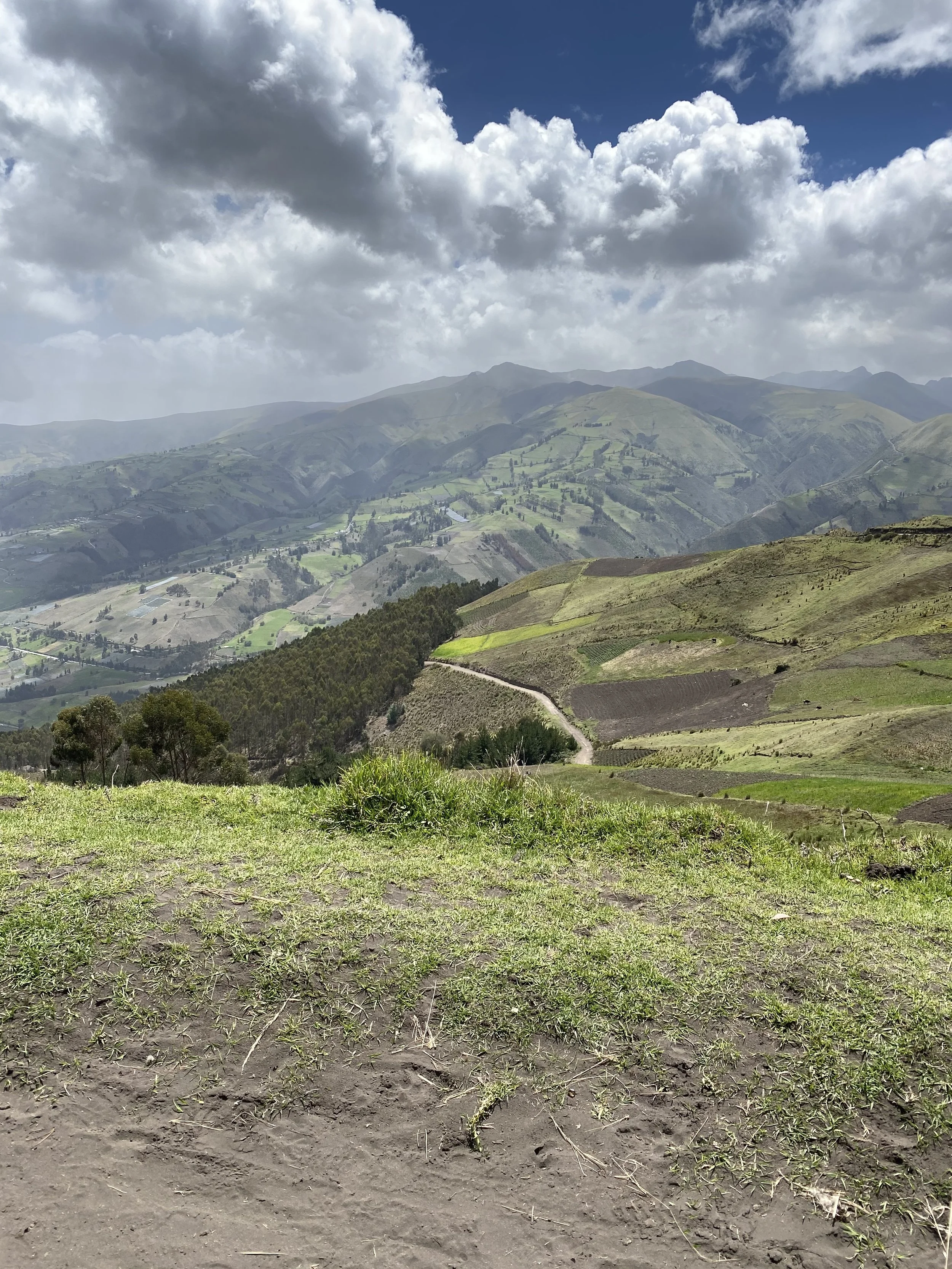
The Two Chimborazo Irrigation Projects
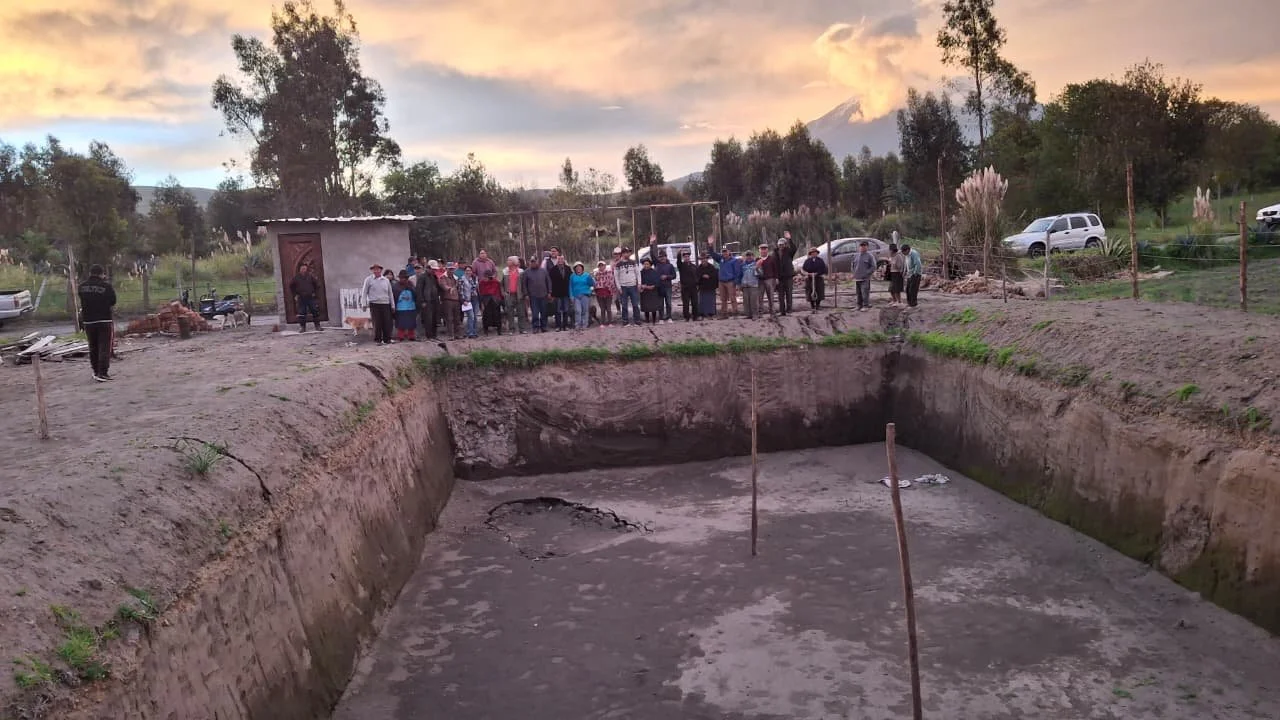
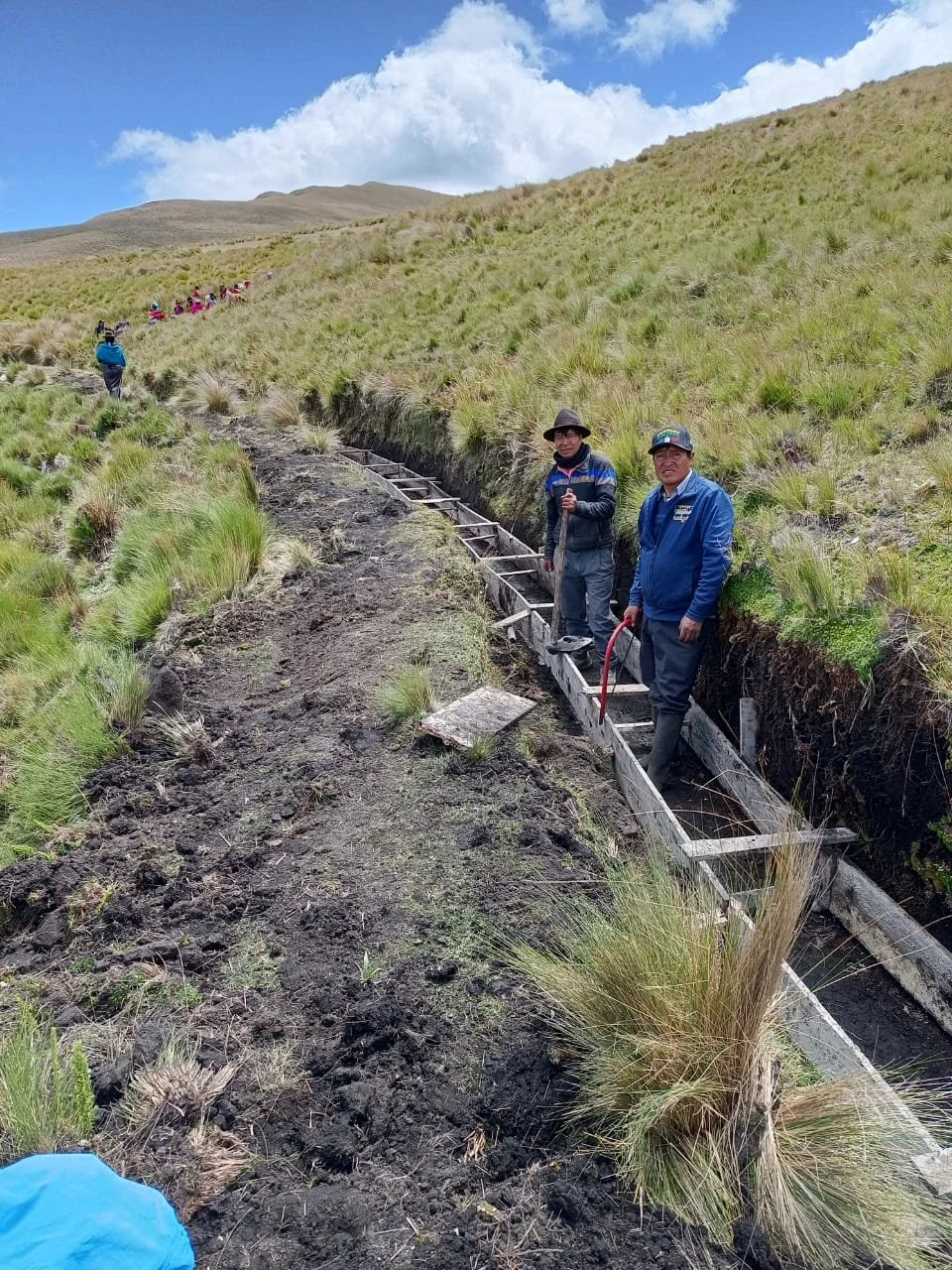
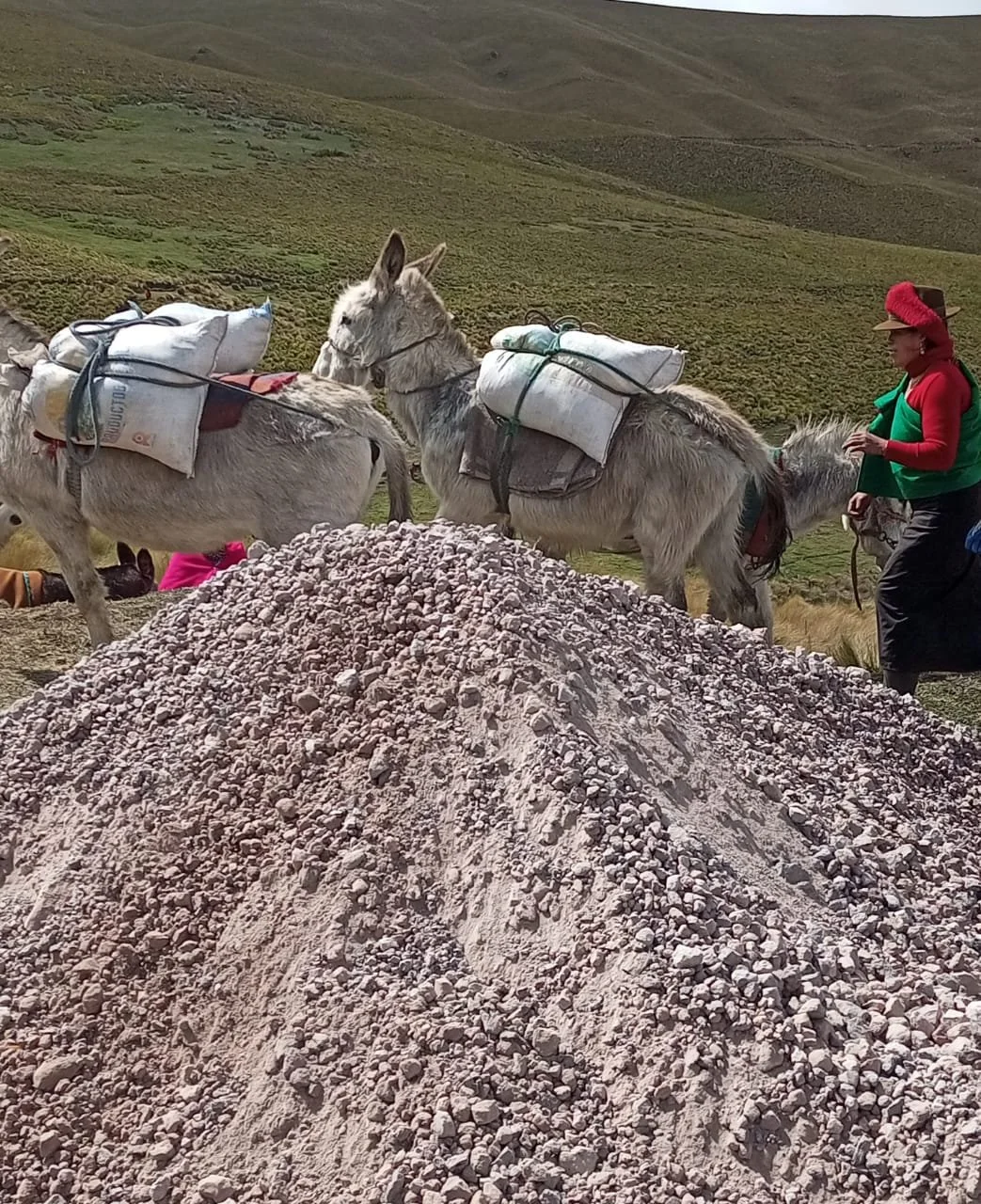
The Chimborazo irrigation projects are tailored to address the distinct agricultural and environmental challenges faced by Gaushi, a hamlet of Riobamba, and Pull, a hamlet of Guamote. These communities, reliant on mountain terrain for their livelihoods, require solutions that respect both the land and their limited resources. Central to this strategy is the installation of cisterns designed to capture and store water during periods of adequate rainfall — a direct response to the increasingly erratic weather patterns produced by climate change. As glacial retreat and unpredictable precipitation render spring flows less reliable, these cisterns provide communities with managed reserves that can sustain irrigation during extended dry spells and drought periods. This climate-adaptive infrastructure operates alongside pressurized water conduction using PVC or polyethylene piping instead of traditional open canals, offering three crucial advantages:
Reduced Water Losses: On steep terrain, open canals lose significant water to seepage and evaporation. Pressurized pipes minimize these losses, ensuring more water reaches the fields where it’s needed.
Erosion Protection: Open channels can lead to gully erosion on slopes, steadily degrading the land’s stability and usability. Pipes eliminate this risk, preserving the soil and safeguarding surrounding ecosystems.
Efficient Application Options: The gravity head naturally available in mountain settings enables sprinkler or drip irrigation without relying on external pumps or energy sources. This gravity-fed design reduces operational costs, sparing households and water boards from the long-term financial burden of fuel or electricity expenses.
This thoughtful approach ensures a resilient, climate-adaptive irrigation system. Cisterns installed at both sites collect and store water during periods of adequate rainfall, providing managed reserves that communities can draw on as shifting weather patterns and prolonged drought — both products of accelerating climate change — render natural flows increasingly unreliable. Combined with pressurized piping, this integrated infrastructure gives the communities of Gaushi and Pull dependable access to water across seasons, while protecting their environment, preserving their land, and securing their ability to farm effectively for years to come.
Both projects are expected to produce benefits that reinforce one another:
Food security and nutrition. Steady irrigation allows a second growing season and a wider range of crops, including vegetables that improve household diets, especially for children.
Household income. Larger and more reliable harvests produce surplus for local markets such as Riobamba's markets and parish fairs, building family resilience.
Climate adaptation. Cisterns installed at both project sites capture and store water during periods of adequate rainfall, building the managed reserves that communities need to sustain irrigation through extended dry spells and drought. Combined with efficient water application, this infrastructure equips communities to manage the increasingly erratic weather patterns that accelerating climate change continues to produce.
Páramo conservation. Higher yields on existing land reduce the need to farm further up the mountain, protecting the water source for everyone downslope.
Time and gender equity. Water delivered closer to fields and homes frees women and girls from long hours of hauling water.
Stronger community governance. The systems will be managed by local water boards (juntas de agua or juntas de riego), building on long Andean traditions of collective water management.
Cultural continuity. When farming can support a family, young people have a real choice to stay — keeping Kichwa language, ceremony, and agricultural knowledge alive.
Pump House powered by Solar Power with battery array
2. The Guatemala Context: Chuicutama, Santa Catarina Ixtahuacán
A Community Displaced by Climate Change
Santa Catarina Ixtahuacán is a municipality in the department of Sololá in western Guatemala, located in the highlands of the Sierra Madre range. It is predominantly Kaqchikel and K'iche' Maya, a community with deep ancestral roots in the land, its cultivation, and its spiritual geography. Like many highland Maya communities in Guatemala, Santa Catarina Ixtahuacán has long faced extreme poverty, geographic isolation, and the structural exclusion of Indigenous peoples from the country's political and economic life.
The community of Chuicutamá is one of the settlements within the municipal area of Santa Catarina Ixtahuacán in Sololá. The broader population of Santa Catarina Ixtahuacán has been severely affected by climate-driven natural disasters. After catastrophic landslides — intensified by the increasingly erratic and extreme rainfall patterns now linked to climate change in the Central American highlands — several communities were formally declared to be in zones of high risk. Families were ordered to relocate. Their original homes were uninhabitable. Their land, the foundation of livelihood, ceremony, and identity, was declared too dangerous to return to.
The relocation site — a region known as the Summit of Alaska because of the relatively cold temperatures— sits atop an elevated volcanic rock formation. This geological character was not incidental to the community's crisis. It was the central technical obstacle the community faced in establishing basic water access at their new location.
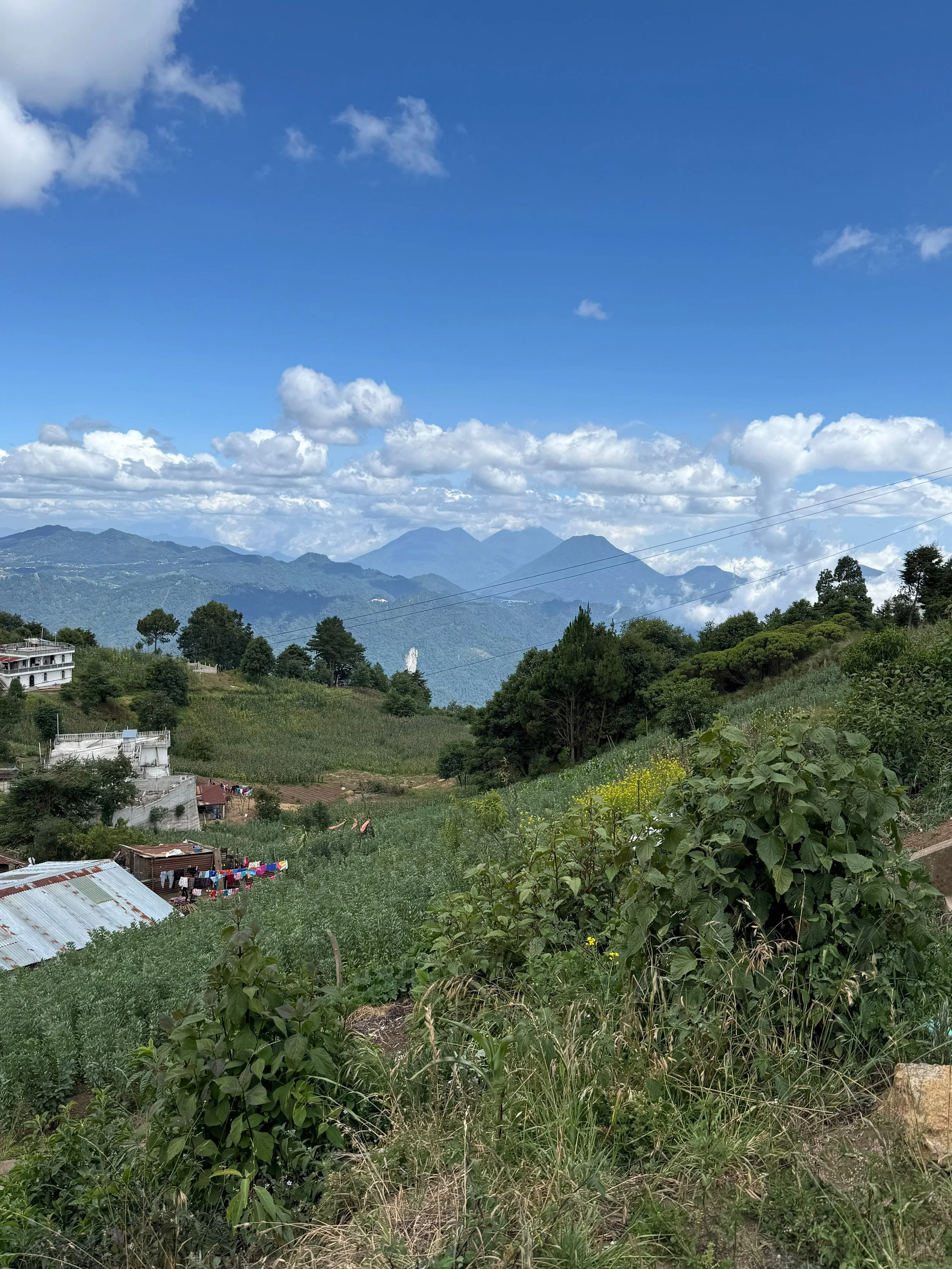
Region of resettlement in Santa Catarina Ixtahuacan
The Challenge of Volcanic Rock: Water Access in a Relocated Community
Digging wells in most highland communities is already physically demanding and expensive work. In Chuicutamá's relocation site, the presence of dense, solid volcanic rock formations at and near the surface made conventional well-digging methods effectively impossible without specialized equipment and significantly greater investment. Where standard hand-dug or shallow-bore wells might serve communities on soil or softer substrate, Chuicutamá's families faced bedrock.
This geological reality compounded an already precarious situation. The community had been uprooted by forces outside its control — first by decades of environmental degradation and climate disruption, then by the landslides those conditions produced. Having lost their original homes, they arrived on new ground without reliable water infrastructure. The volcanic rock beneath them meant that the most common, most affordable solutions simply would not work.
It is worth situating this within the broader structural context. Indigenous communities in highland Guatemala, like their counterparts in highland Ecuador, did not choose their most vulnerable land. The concentration of Mayan communities on steep, ecologically fragile terrain is itself a product of colonial dispossession and post-colonial exclusion — a spatial inheritance of inequality that leaves Indigenous families most exposed when climate events strike. When a landslide destroys a community, it does not destroy it equally. The communities most likely to be in its path are those who were pushed there by historical forces they had no hand in creating.
HSP's $10,000 grant to Chuicutamá is a direct response to this compounding vulnerability. It is not a large sum relative to the need. But it represents a concrete commitment to stand with a community navigating one of the most difficult intersections of climate displacement, geological constraint, and structural poverty that HSP has encountered in its work across the Guatemalan highlands.
The Spring bringing life to Chuicutama
3. A Partnership Built on Local Knowledge and Accountability
A persistent critique in development studies is that outside-driven water projects often fail. Pumps break, canals silt up, and systems sit unused because they were designed for communities rather than with them. HSP's approach — across both Ecuador and Guatemala — is explicitly structured to avoid that pattern.
Highland Support Project (HSP)
HSP brings decades of experience in community-led development with Indigenous highland peoples across the Americas. Its approach puts local leadership and cultural dignity first. HSP provides grant funding, donor accountability, and a commitment to long-term relationships rather than one-time interventions.
Dr. Luis Alberto Tuaza Castro, Universidad Nacional de Chimborazo
Dr. Tuaza is a professor at the Universidad Nacional de Chimborazo and a respected scholar of the Indigenous movement, community organizing, and agrarian change in the Ecuadorian Andes. His research offers the historical and social grounding that keeps the Ecuador projects tied to community priorities rather than outside assumptions. His academic role also brings rigor to monitoring and documentation, helping ensure that results can be measured, reported, and learned from.
Fundación Kawsayta Awashun
Fundación Kawsayta Awashun is the local implementing partner for the Chimborazo projects, working directly with communities in the province. The foundation carries out on-the-ground coordination, organizes community mingas, oversees construction, and supports the water boards that will manage the systems over time. Its local presence and trusted relationships are essential to both carrying out the projects and keeping them running for years to come.
Partner Networks in Guatemala
HSP's Guatemala work in Sololá is carried out deliberately through — and in active support of — the governance structures that hold legitimate authority in Chuicutamá and Santa Catarina Ixtahuacán. This is not an administrative convenience. It reflects a principled commitment to the proposition that outside assistance which bypasses local institutions, however well-intentioned, undermines the very capacities it claims to build.
Four institutions anchor this approach:
The Asociación de Mujeres del Altiplano (Association of Highland Women) brings years of organized presence in the region, with deep roots in women's leadership, community mobilization, and the kind of sustained relationship-building that outside organizations cannot replicate on project timelines. Working through AMA ensures that women — who carry a disproportionate share of household water labor and who are most directly affected by water insecurity — have an institutionalized voice in how this intervention is designed and implemented.
The COCODE of Chuicutamá — the Consejo Comunitario de Desarrollo, or Community Development Council — is the community's legally recognized, locally elected governing body: the organized authority through which Chuicutamá exercises collective decision-making, coordinates community efforts, and maintains accountability to its residents. COCODEs are not branches of the municipal government; they are the community's own institution, responding directly to the community assembly that elects them. Engaging the COCODE as a formal partner rather than as a passive recipient of assistance affirms its legitimacy and ensures that the water project is owned by the community in a governance sense, not only in a material one.
The Indigenous Mayors' Office (Alcaldía Indígena) holds customary authority that runs parallel to — and in many respects deeper than — the formal municipal structure. In communities like Santa Catarina Ixtahuacán, the Indigenous Mayors' Office mediates disputes, enforces community norms, and commands a respect grounded in cultural continuity rather than electoral appointment. Any water intervention that proceeds without its engagement risks institutional friction, reduced compliance, and eventual abandonment.
The Municipal Government of Santa Catarina Ixtahuacán represents the formal legal and administrative authority with jurisdiction over infrastructure, land use, and public services. Coordination with the municipal government situates the project within a legal framework that can support long-term maintenance agreements, future funding cycles, and integration with broader municipal planning — connecting a targeted community intervention to the larger governance architecture within which it must ultimately operate.
The development literature is unambiguous on the core lesson these partnerships reflect: water projects that bypass existing institutions may be built faster, but they fail sooner. Infrastructure installed outside of recognized authority structures lacks the institutional backing needed to resolve disputes, enforce maintenance obligations, or attract follow-on investment. By routing its work through the Association of Highland Women, the Code of Chuicutamá, the Indigenous Mayors' Office, and the Municipal Government, HSP ensures that this project is not an isolated act of assistance but a contribution to the durable governance of water as a community resource.
Why This Model Works
Across both countries, the partnership model joins funding and accountability (HSP), research and contextual expertise (Dr. Tuaza and local scholars), and local implementation and trust (Fundación Kawsayta Awashun and Guatemalan partner networks). Communities contribute their own labor and knowledge and take ownership of finished systems. This shared investment is the strongest predictor that a water project will still be running a decade from now.
4. With Gratitude: The Supporters Who Made This Work Possible
These investments exist because of the generosity of three groups of supporters.
The Bon Air Rotary Club
The Bon Air Rotary Club's commitment reflects Rotary International's long dedication to clean water, sanitation, and community economic development. Their support demonstrates how a local civic community can make a lasting difference in Indigenous communities thousands of miles away — in Ecuador's high Andes and in Guatemala's displaced highland settlements alike. We are deeply grateful for their partnership and their trust in this work.
Old Bridge United Methodist Church
Old Bridge United Methodist Church's support of the Chuicutamá water project reflects a faith community living out its values in concrete, material terms. For a community displaced by climate-driven landslides and rebuilding on volcanic ground where even accessing water required exceptional effort, that commitment made a direct difference. It is a reminder that the reach of a local congregation extends far beyond its own walls — and that faithful stewardship of resources can translate into something as fundamental as clean water for a family rebuilding its life. We are grateful for Old Bridge's partnership and for the conviction behind it.
Participants in HSP's Annual Turkey Trout
Every runner, walker, volunteer, and sponsor who joined HSP's annual Turkey Trout helped turn a community tradition into real infrastructure: irrigation lines in Chimborazo, and water access support in a Guatemalan community rebuilding its life atop volcanic rock after climate-driven displacement. Each registration and each dollar raised is now part of something lasting. Thank you for showing up, and for showing what collective effort can achieve.
5. Monitoring, Accountability, and Next Steps
To ensure transparency and measurable results, HSP and its partners will track the following across both the Ecuador and Guatemala investments:
Ecuador — Chimborazo Water Projects:
Completion of infrastructure against planned timelines and budgets
Households and hectares served by each system
Changes in crop variety, yields, and growing seasons reported by participating families
Time saved on water collection, with attention to women's workloads
Functionality of water boards, including governance, maintenance, and fee collection where applicable
Páramo conservation indicators where communities choose to adopt protection agreements
Guatemala — Chuicutamá Water Assistance:
Completion of water access infrastructure and verification that it meets technical requirements given the volcanic rock substrate
Number of households with reliable water access following project completion
Community-reported assessment of impact on daily life, agricultural activity, and household well-being
Documentation of technical approaches developed for volcanic rock contexts, to inform future interventions in similarly affected communities
HSP will share progress updates and a final impact report with all supporters, including the Bon Air Rotary Club and Turkey Trout participants.
Conclusion
The projects described in this report are separated by more than a thousand miles and by distinct histories. Yet they share a common thread. In Chimborazo, Indigenous families gained their freedom from the hacienda system but were often left with the land no one else wanted — high, steep, and without water. In Chuicutamá, a Maya community was forced from its land altogether by landslides that climate disruption has made more frequent and more destructive, only to find itself rebuilding on ground so geologically hard that even digging a well required exceptional effort and resources.
In both cases, the lack of water is not a natural fact. It is the endpoint of a chain of historical, political, and environmental forces that consistently placed Indigenous communities at greatest risk with fewest resources. Community-governed infrastructure does not undo that history. It does, however, give families the material means to recover, to farm with dignity, and to stay on the land they have rebuilt.
Through the Ecuador partnership of HSP, Dr. Luis Alberto Tuaza Castro, and Fundación Kawsayta Awashun — and through HSP's direct investment in Chuicutamá — and through the generosity of the Bon Air Rotary Club and the Turkey Trout community, Indigenous families in two countries are taking concrete steps toward water security, agricultural resilience, and self-determination. We invite your continued support to expand