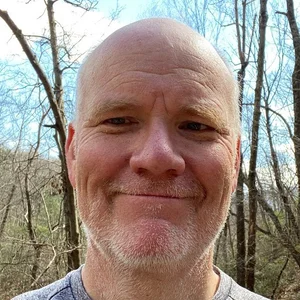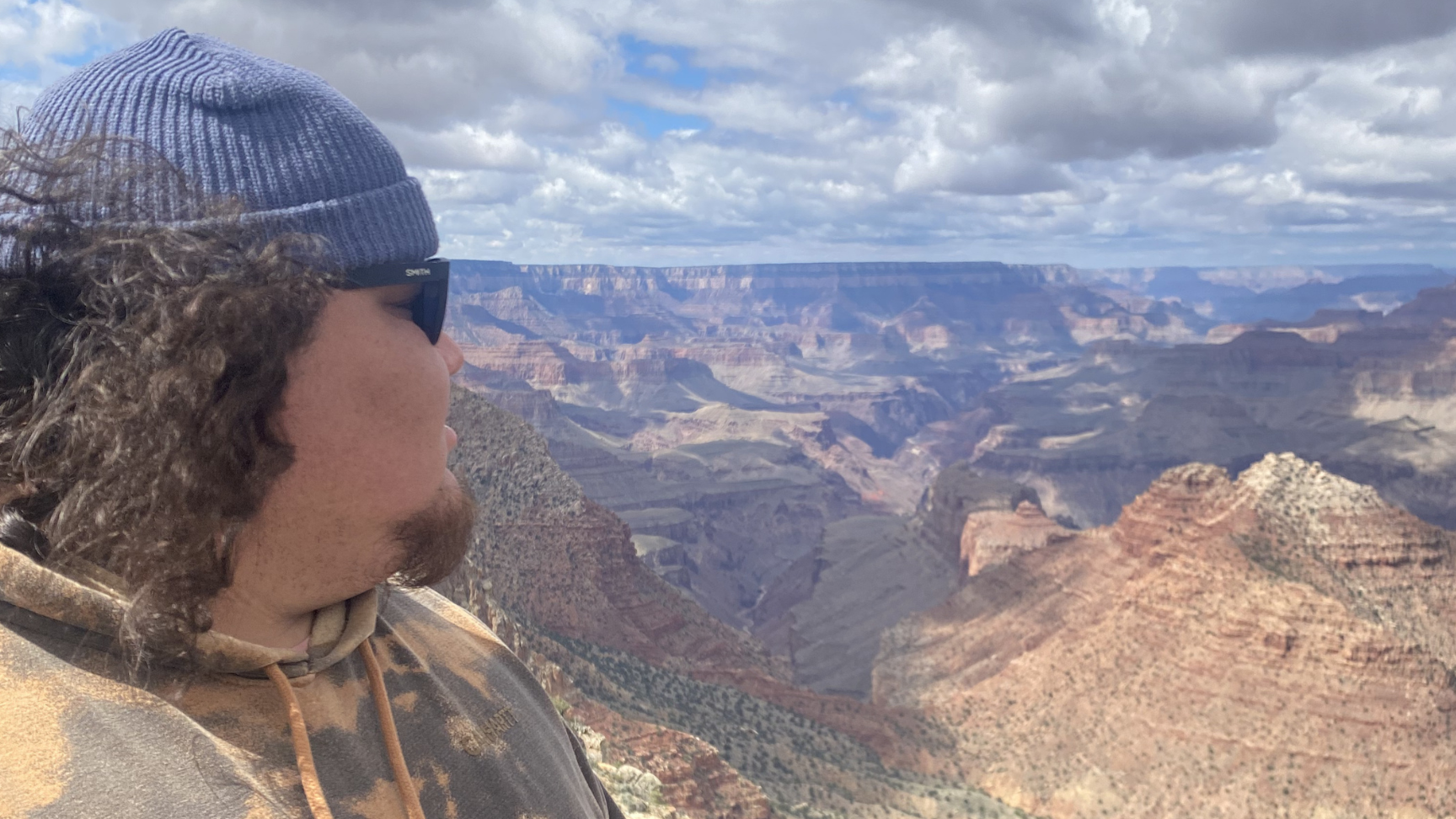
Looking out over the vast, ancient silence of the Grand Canyon, DEEP program facilitator Brian Ramirez serves as a steady, trusted guide. By grounding the immense realities of our environment in the soil of lived experience, he helps high school youth transform the weight of climate anxiety into a deep sense of wonder and a living, reciprocal connection with the Earth.
To understand the ecological crisis is to feel its weight.
For many young people, that weight is not abstract. It is intimate, daily, and psychological. It can appear as climate anxiety: the distress, worry, fear, and emotional strain that arise in response to climate change and the wider environmental crisis. Eco-anxiety is the broader term. It includes distress linked not only to climate change, but also to biodiversity loss, pollution, extinction, and ecological degradation more broadly. For today’s youth, who will live longer with the consequences of a warming planet than any generation before them, these feelings are not irrational. In many cases, they are a sane response to an unstable reality.
A growing body of research now makes this clear. A 2023 integrative review on youth eco-anxiety in the International Journal of Mental Health Nursing argued that eco-anxiety in young people should not automatically be treated as pathology. Instead, it is often an adaptive response: evidence that a young person is paying attention, making moral meaning, and trying to reconcile their future with a world in crisis. But that adaptive response has a threshold. When concern meets relentless catastrophic messaging, few opportunities for meaningful action, and a felt sense that governments are failing to act, it can harden into despair. Concern can become eco-paralysis: a condition in which emotional overwhelm suppresses agency, motivation, and sustained engagement. Young people do not stop caring. They stop believing their care can matter.
This is the urgent educational and psychological terrain in which the Deep Ecology Education Program works.
Our program was developed to intervene precisely at the intersection of grief and possibility. Rather than relying on information-heavy models that can unintentionally intensify hopelessness, we are building an evidence-informed approach that addresses both ecological literacy and emotional resilience. We aim to cultivate climate capability: the combination of knowledge, practical skills, motivation, and confidence that helps young people make meaningful behavioral changes, participate in collective action, and understand the role of systems, governance, and community in responding to climate change.
This matters because the challenge before us is not simply to teach young people about climate change. It is to help them metabolize its emotional burden without becoming immobilized by it. It is to develop programming that does more than educate and inspire. It must also address the behavioral conditions that contribute to climate inaction: helplessness, disconnection, fatalism, and the feeling that one person’s actions do not matter.
Recent research points in a remarkably consistent direction. Young people benefit when climate education moves beyond doom-based framing and toward participatory, place-based, hopeful, and relational learning. They need structured ways to connect knowledge with action, feeling with purpose, and anxiety with agency.
The Deep Ecology Education Program is one effort to build that model.
Recently, we piloted this framework with a cohort of high school students from Community High School in Richmond, Virginia, guiding them through a transformative learning journey across the high desert. The desert, with its stark beauty and disciplined forms of life, became more than a setting. It became a teacher. By bridging ancestral wisdom with contemporary ecological practice, the curriculum offered students concrete pathways for responding both to the external climate crisis and to the internal burdens carried by what many now call the climate generation.
Why Youth Climate Anxiety Demands a New Educational Response
Young people occupy a distinct place in the climate crisis. Developmentally, adolescence is a period when abstract reasoning deepens, moral imagination expands, and awareness of future consequences becomes more acute. At the same time, young people have limited structural power. They can see the scale of the problem, but often cannot vote, redesign policy, control infrastructure, or direct large-scale investment. This gap between awareness and power can be psychologically destabilizing.
A major 2025 systematic review in Nature Mental Health, covering 69 studies on eco-anxiety in children and young people, found that youth eco-anxiety is shaped by a social and political ecology. Age and developmental stage matter. So do media exposure, direct experience of environmental disruption, and the belief that institutions are failing to act. That review also found that many young people feel betrayed by older generations and political systems that acknowledge the crisis rhetorically while failing to respond with sufficient urgency. This perceived institutional betrayal is not a minor emotional variable. It is one of the clearest drivers of distress.
At the same time, the research offers an essential nuance. Climate anxiety is not always debilitating. In moderate forms, it can support pro-environmental behavior, civic engagement, and moral seriousness. Some researchers describe a kind of “Goldilocks zone,” where concern is strong enough to motivate action but not so overwhelming that it produces shutdown. The task for educators, then, is not to erase climate anxiety. It is to help young people carry it in ways that remain life-giving, socially grounded, and behaviorally generative.
That is the central wager of our work.
From Information to Transformation
Traditional climate education often stops at awareness. It tells young people what is happening, why it is happening, and how severe the consequences may be. That information is necessary. But on its own, it is not enough.
Without emotional support, practical pathways, and collective contexts for response, knowledge can deepen distress rather than relieve it.
The Deep Ecology Education Program takes a different approach. We work from the understanding that learning is not only cognitive. It is relational, embodied, cultural, and emotional. Students do not need more facts alone. They need experiences that restore their sense of participation in the living world. They need to witness ecological care in practice. They need to see that adaptation, stewardship, and collective action are not theoretical ideals but lived realities.
In this sense, our program functions as a model for meta-cultural change: change not only in what young people know, but in the frameworks through which they understand themselves in relation to land, community, history, and future responsibility. We help students move from spectatorship to participation. From dread to discernment. From paralysis to practiced care.
Programmatic Interventions and Ecological Relationality
Our educational model relies on hope-promoting, participatory interventions that actively dismantle the false binary of doom versus salvation. The ecological crisis does not ask us to choose between denial and apocalypse. It asks us to remain present, skillful, and in relationship.
During the recent pilot, students engaged directly with Indigenous leaders, scientists, and higher education practitioners through three interwoven experiential pillars.
Community Healing and Ancestral Hydrology
One of the strongest findings in current youth climate-anxiety research is that feelings of powerlessness intensify when young people believe institutions have abandoned them. To counter this, education must reveal forms of local, collective efficacy. Students need to encounter communities that are already responding with intelligence, care, and endurance.
As part of the program, students visited the White Mountain Apache reservation and entered into a reciprocal partnership with the White Mountain Healing Coalition. There, they contributed to a natural healing center and worked alongside tribal hydrologist Cheryl Pailzote to help restore local flood canal systems. This was not symbolic work. It was practical, place-based ecological labor rooted in longstanding relationships between community, water, and land.
A subsequent visit to the S’edav Va’aki Museum in Phoenix deepened this experience. Students were able to situate their recent work within a much longer history of water stewardship, learning how ancestral hydrology shaped survival in arid landscapes. Hydrology, simply put, is the study and management of water: how it moves, collects, nourishes, and sustains life across landscapes and communities. Here, students saw clearly that water management is not only a technical issue. It is cultural memory, adaptation, and communal continuity.
This kind of learning matters deeply. It shows students that resilience is not invented from scratch in moments of crisis. It is inherited, practiced, renewed, and shared. By engaging land and water not as abstract systems but as living relations, students experienced ecological care as something collective and enduring.
Off-Grid Sustainability and Tangible Solutions
Another major driver of youth eco-anxiety is the sense that meaningful change is impossible. Catastrophic media narratives can create the impression that all practical solutions are either too small, too late, or inaccessible. To interrupt this, young people need experiences that make viable alternatives visible and concrete.
The group traveled to Akoshoa Farms, an off-the-grid homestead hosted by soil scientist Kim Howel and renewable energy expert Jo Costin. There, students encountered sustainability not as a slogan but as a daily, integrated practice. They learned how healthy soil systems support biodiversity, moisture retention, and food production. They saw how renewable energy systems can be woven into everyday life. They observed closed-loop relationships in which waste is minimized, resources are cycled, and ecological limits are treated as guides rather than obstacles.
This hands-on work translated abstract theory into lived possibility. Soil health became something you could touch. Energy transition became something you could see operating in real time. Students were not simply told that a sustainable future is imaginable. They were invited into spaces where it was already being rehearsed.
This approach aligns with emerging evidence. A 2025 randomized controlled trial published in Frontiers in Psychology tested a nature-based climate intervention with teenagers in Ireland. The study found that when climate capability increased, eco-anxiety also increased. At first glance, that may sound discouraging. But the finding is actually more subtle and more hopeful. The intervention did not erase anxiety. It transformed its function. Students became more aware, more emotionally engaged, and more capable of meaningful response. Their concern did not disappear. It became integrated with action.
That distinction is central to our model.
Higher Education and Systemic Advocacy
If young people are to remain engaged over time, they need to see pathways forward. They need to understand that concern for the planet can develop into study, vocation, advocacy, and leadership. Otherwise, climate anxiety can become fused with isolation and a diminished sense of future.
The intervention concluded with a visit to Prescott College, widely recognized for its work in environmental studies. Through experiential learning modules at the college’s center for environmental education, students connected their field-based experiences with broader academic frameworks. They encountered the possibility that ecological care can become a lifelong discipline rather than a passing emotional response.
This is where the personal and the systemic begin to meet. Students were not only affirmed in their emotional responses to climate change. They were introduced to structural pathways for stewardship and advocacy. Advocacy here means organized efforts to influence institutions, policies, and public priorities in ways that support ecological and social well-being. It matters because behavioral change alone is not enough. Young people must also understand the need for collective action, governance, and systems transformation.
What the Research Tells Us
Our approach is grounded in a growing body of research on youth eco-anxiety and educational intervention.
The 2023 integrative review by Hailie Brophy, Joanne Olson, and Pauline Paul, published in the International Journal of Mental Health Nursing, found that eco-anxiety in youth is real, widespread, and often poorly supported by current institutions. The review emphasized that young people benefit when adults avoid pathologizing their distress and instead focus on hope promotion, emotional resilience, climate justice, and meaningful action. It also argued that educators should challenge binary thinking, especially the idea that the future is either fully doomed or easily saved. Young people need more complex and more honest narratives.
The 2025 Nature Mental Health review by Claire Niedzwiedz, Shamal Kankawale, and Srinivasa Katikireddi reached similarly important conclusions from a broader evidence base. Their analysis found that eco-anxiety among children and young people is consistently associated with developmental stage, media exposure, direct climate impacts, and perceived government inaction. It also highlighted a critical gap: most existing research has been conducted in the Global North, often with samples that underrepresent Indigenous communities and the Global South. That matters for our work. It reinforces the need for culturally inclusive models and for deeper investment in programming that learns from communities already living with ecological disruption and long histories of adaptation.
Most significantly for our intervention design, the randomized controlled trial by Róise Glynn and colleagues in Frontiers in Psychology offers one of the clearest empirical signals now available. Their study found that teenagers who participated in a nature-based climate intervention showed significant gains in climate capability, along with increased eco-anxiety. Rather than interpreting that increase as failure, the authors argue that the intervention helped build positive relationships with the environment and stronger capacity to effect change. In other words, the young people felt more, but they also became more capable.
This insight matters enormously.
We are not trying to make young people feel less. We are helping them feel in ways that support continued action, relationship, and purpose.
Addressing Behavioral Barriers to Climate Action
For donors, one of the most important questions is this: how does programming like this contribute to actual change?
The answer lies partly in behavior.
Climate inaction is not only a policy problem or a technological problem. It is also a behavioral and emotional problem. People often fail to act not because they know too little, but because they feel overwhelmed, isolated, fatalistic, or detached from the living systems they depend on.
Among youth, these barriers can be especially acute. Many want to help but do not know where to begin. Many care but feel they have no meaningful leverage. Some are exhausted by the constant demand to imagine catastrophe without being offered pathways for participation. Effective programming must therefore address not just environmental literacy, but the emotional and social conditions that shape whether knowledge becomes action.
The Deep Ecology Education Program addresses these conditions by:
reconnecting students with living ecosystems through direct experience
building self-efficacy through practical ecological work
validating emotional responses rather than dismissing them
replacing passive consumption of crisis narratives with participatory learning
demonstrating local and communal forms of adaptation
creating pathways toward lifelong stewardship and civic engagement
situating personal behavior within wider systems of collective responsibility
In other words, we work on the inner and outer dimensions of climate response at the same time.
Transforming Anxiety into Action
The Deep Ecology Education Program demonstrates that when young people step outside highly mediated, urbanized environments and enter structured, supportive, culturally inclusive relationships with land and community, something profound can shift.
As their climate capability expands, their eco-anxiety does not necessarily vanish. Instead, it is transmuted. It changes character. It becomes less like a sealed chamber of dread and more like a current moving toward action.
That distinction is essential.
Too often, success in climate education is imagined as reduced concern or increased optimism. But real success may look different. It may look like deeper concern joined to stronger agency. Greater honesty joined to greater resilience. More grief, perhaps, but also more capacity to remain present with that grief without being consumed by it.
This is especially important in the Anthropocene, the era in which human activity has become a dominant force shaping Earth’s climate, ecosystems, and geological systems. To educate for the Anthropocene is not merely to prepare students for environmental facts. It is to prepare them for a historical condition in which ethics, behavior, systems, and ecological interdependence must all be rethought together.
That work cannot be done through information alone.
Why This Matters Now
We are living through a moment in which youth mental health, climate instability, and institutional distrust are converging. If we fail to address these together, we risk raising a generation that is highly informed but emotionally exhausted, morally alert but behaviorally immobilized.
The alternative is to invest in programming and research that help young people become climate capable: able to understand ecological realities, regulate distress, build reciprocal relationships with the more-than-human world, and participate in collective forms of change. The more-than-human world means the wider community of life beyond humans: plants, animals, waters, soils, and ecosystems with which we are inseparably bound.
Our recent pilot offers a promising model, but it is only a beginning.
Continued support would allow us to refine, evaluate, and expand this work. It would help us deepen our research into which interventions most effectively reduce eco-paralysis and foster durable pro-environmental behavior. It would also allow us to build a stronger evidence base for educational practices that address climate anxiety without minimizing the reality that underlies it.
This is the work donors can help make possible: not just climate education, but climate formation. Not just awareness, but capacity. Not just concern, but courage that knows how to act.
By investing in experiential, relational, and research-informed programming, we can help equip the next generation with the emotional, intellectual, and practical tools required to navigate a changing Earth. We can help cultivate young people who are not shielded from reality but strengthened for it. And in doing so, we lay the groundwork for a more resilient, interconnected, and ecologically conscious society.
Research behind this work
For readers who want to explore the research directly, these are the key studies that inform this framing and can be easily found online by title or DOI:
“Eco-anxiety in youth: An integrative literature review” by Hailie Brophy, Joanne Olson, and Pauline Paul, published in the International Journal of Mental Health Nursing in 2023. DOI: 10.1111/inm.13099
“A randomized controlled trial of the effect of a nature-based intervention on climate capability and eco-anxiety in teenagers” by Róise Glynn and colleagues, published in Frontiers in Psychology in 2025. DOI: 10.3389/fpsyg.2025.1648880
“A systematic review of social, political and geographic factors associated with eco-anxiety in children and young people” by Claire L. Niedzwiedz, Shamal M. Kankawale, and Srinivasa Vittal Katikireddi, published in Nature Mental Health in 2025. DOI: 10.1038/s44220-025-00550-z